
Your cart is currently empty!

Infrared saunas have taken the wellness world by storm—and for a good reason. They’re known for offering a range of potential health benefits, from boosting mood to speeding up workout recovery and more. But for those considering adding infrared therapy to their daily wellness routine, a question often pops up: Do infrared saunas use a lot of energy?
The answer? Not at all! Infrared saunas are incredibly energy-efficient.
In this guide, we explore how much energy infrared saunas actually use, factors that make them so efficient, and tips for saving electricity while still getting the most from your sauna. Read on to learn more!
Are Infrared Saunas Energy Efficient?
Infrared saunas are highly energy efficient. Instead of heating the air around you, infrared saunas use infrared (IR) light to heat you directly. Using harmless electromagnetic radiation, IR saunas warm the body from within, triggering a powerful sweat response with many potential health benefits.
But that’s not all. This unique heating method also means infrared saunas require very little energy overall.
How Much Energy Do Infrared Saunas Use?
Tylö infrared saunas only use about 1.5–2 kWh of energy during a 1-hour session.1 For reference, the average energy consumption for a dishwasher running on a normal cycle is also 1.5–2 kWh.2
How Energy Consumption is Measured:
For most home appliances, energy consumption is measured in kilowatt-hours (kWh). Here’s an overview of what this means:
- Kilowatts (kW): measure how much electricity is used at a single moment, with 1 kW representing 1000 watts
- Kilowatt-hours (kWh): measure how much electricity is consumed over a period of time, specifically 1 kW of power used for 1 hour
- For example: using a 1000-watt (1 kW) appliance for 1 hour would consume 1 kWh of energy.
What Makes Infrared Saunas So Energy Efficient?
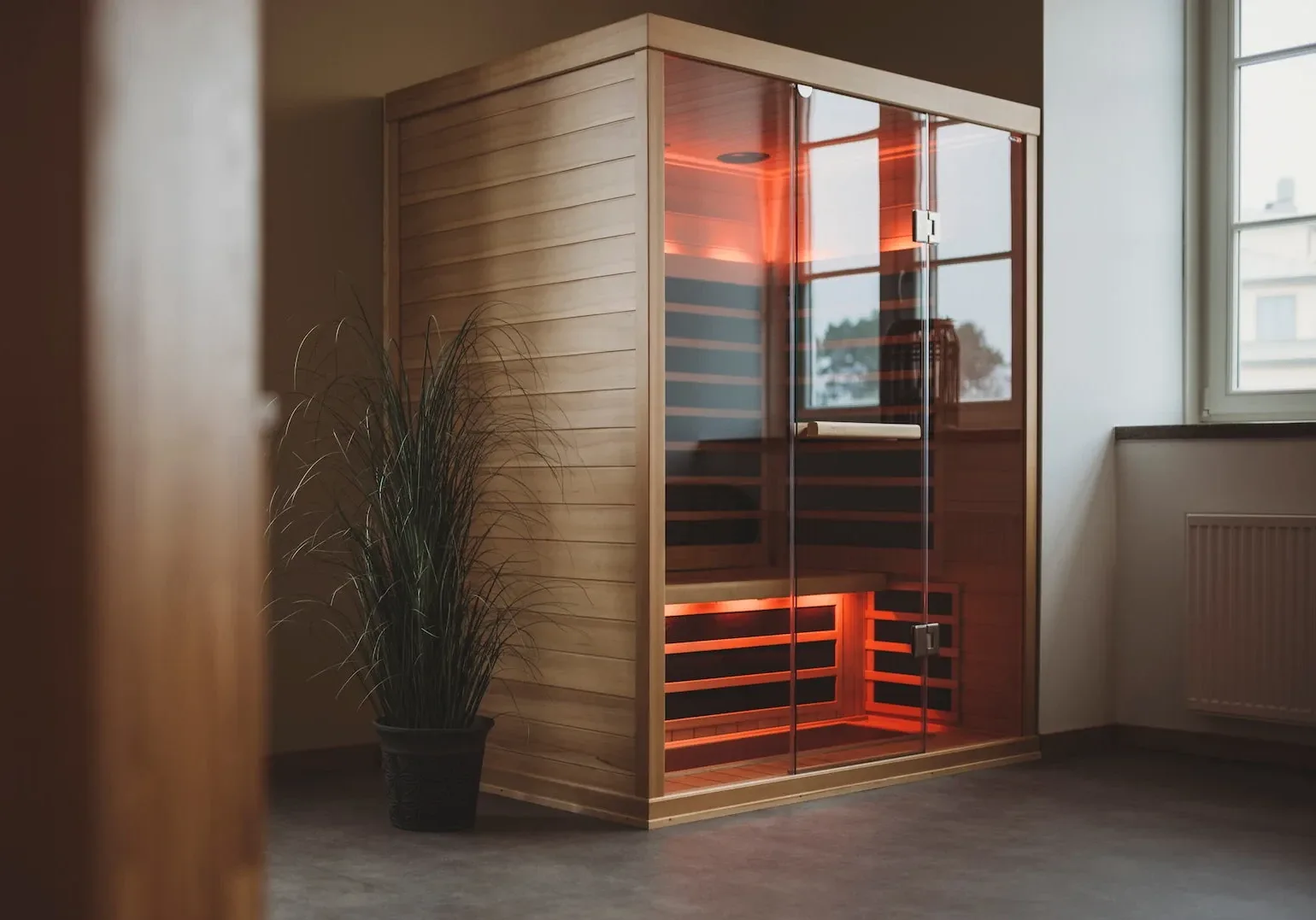
The amount of energy an infrared sauna uses per session is about the same as running a dishwasher on a normal cycle. Below are some of the main factors that make infrared saunas so energy efficient:
Direct Infrared Heating
Infrared saunas use infrared light to heat your body from within. Only about 20% of the heat produced by an infrared sauna goes into the air, while the remaining 80% warms your body directly.3 This direct heating method means less energy is being wasted on heating the entire sauna, resulting in a lower power demand and less electricity used each session.
Faster Heating Process
Infrared saunas warm up very quickly, and is ready to use in only about 10-15 minutes. Infrared saunas also require less power overall to produce the optimal heat intensity. So not only do IR saunas heat up fast, they also need less energy to do it. These combined benefits make infrared saunas highly efficient.
Shorter Sauna Sessions
Infrared sauna heat can feel more intense, even at a lower ambient temperature. That’s because IR light directly penetrates your skin and underlying tissue, so your body heats from within. This also stimulates a more profound sweat response and deeper relaxation.
Since infrared saunas are ready to use quicker and provide efficient heat intensity, you can get all the benefits of sauna therapy in shorter sessions. The less time you need to spend inside, the more energy you can save. Experts recommend keeping infrared sauna sessions under 30 minutes.4
Factors that Affect Infrared Sauna Energy Efficiency

Infrared saunas are inherently efficient, but their energy use isn’t the same in every situation. Things like electrical requirements, session length, and even how well the cabin is insulated can all affect energy use.
Below are some key factors that determine how much energy an infrared sauna uses:
Electrical Requirements
Infrared saunas have different electrical requirements depending on the size, model, and manufacturer. Saunas that require higher voltage and amperage consume more energy.
When determining how much energy an infrared sauna uses, there are a few essential terms to know:
- Volts/Voltaeg: measures the electrical pressure that pushes a current through a circuit
- Amps/Amperage: measures the flow rate of an electric current
- Watts: represents the amount of energy used, which can be found by multiplying Volts x Amps.
Electrical outlets are rated based on voltage and amperage. In the U.S., most standard household electrical sockets can handle up to 120 volts and 15 amps.
Sauna Size
The larger the sauna, the more energy it will use. Infrared saunas designed to seat multiple people have more panels to deliver the full benefits of IR therapy to everyone inside. This means more electricity is used each session.
Materials and Insulation
Construction quality also plays an important role in how much energy an infrared sauna uses. High-quality, durable materials and proper insulation improve the sauna’s heat retention and boost its efficiency.
Gaps around doors, windows, and seams can cause heat loss that makes an IR sauna less efficient. Wood quality is also important for heat retention. Durable options like cedar, hemlock, spruce, basswood, and aspen are resistant to warps, cracks, and moisture damage. This helps preserve the sauna’s structural integrity and heat-retaining properties over time, making it more efficient overall.
Tips to Save Energy While Using an Infrared Sauna

Infrared saunas are already energy efficient, but there are some steps you can take to take this benefit even further.
Below are some tips for saving energy while using an infrared sauna:
- Use a timer to prevent the sauna from running longer than necessary.
- Invest in a sauna with proper insulation & quality materials for the best heat retention.
- Limit sauna use to no more than 4 times a week, with sessions under 30 minutes.4
- Turn off extra features like built-in lights or speakers if you’re not using them.
- Use a lower temperature setting when possible—even a small reduction can save electricity over time.
- Preheat only as long as necessary instead of leaving the sauna on when not in use.
- Maintain your sauna regularly to keep it performing at peak efficiency.
With the right strategies and mindful habits, you can enjoy all the advantages infrared saunas have to offer while reducing energy consumption.
Shop Energy-Efficient Infrared Saunas at Creative Energy
Infrared saunas are energy efficient because they heat your body directly, not the air around you. With a lower power demand, faster preheating, and shorter sessions, they deliver all the benefits of sauna bathing while remaining incredibly energy efficient. At Creative Energy, we’re proud to carry an exclusive selection of Tylö infrared saunas.
Every Tylö sauna is crafted in Sweden with over 75 years of craftsmanship expertise, meeting the highest standards of quality, safety, and performance. Below is a table of different Tylö infrared sauna models and their electricity requirements, listed from lowest to highest energy use:
| Tylö Infrared Sauna Model | Size | Energy Requirements |
|---|---|---|
| Kiruna 1 Infrared Sauna | 1 person | 120v / 15Amp |
| Kiruna 2 Infrared Sauna | 2 people | 120v / 15Amp |
| Kiruna 2 Hybrid Sauna | 2 people | 120v / 15 or 20Amp |
| Kiruna 3 Infrared Sauna | 3 people | 120v / 20Amp |
| Kiruna 3 Hybrid Sauna | 3 people | 120v / 20Amp |
Our expert team at Creative Energy will gladly help you choose the ideal infrared sauna for your home and ensure it’s compatible with your existing electrical setup. With over 40 years in the business, our friendly team of experts is fully qualified to help you find the best home spa setup for your lifestyle and budget.
Contact us online or visit any one of our award-winning showrooms in Concord, San Rafael, or San Mateo to browse our selection in person.
References
- The energy-efficient sauna alternative. (n.d.). https://tylo.com/en-us/blog/the-energy-efficient-sauna-alternative
- Richter, J. (2025, July 9). How much electricity does a dishwasher use? 2025 cost guide. SolarTech. https://solartechonline.com/blog/how-much-electricity-does-dishwasher-use/
- Lindberg, S. (2024, July 26). Is an Infrared Sauna Better Than a Traditional Sauna? Healthline. https://www.healthline.com/health/infrared-sauna-benefits
- Clinic, C. (2022, April 14). Infrared saunas: What they do and 6 health Benefits. Cleveland Clinic. https://health.clevelandclinic.org/infrared-sauna-benefits