
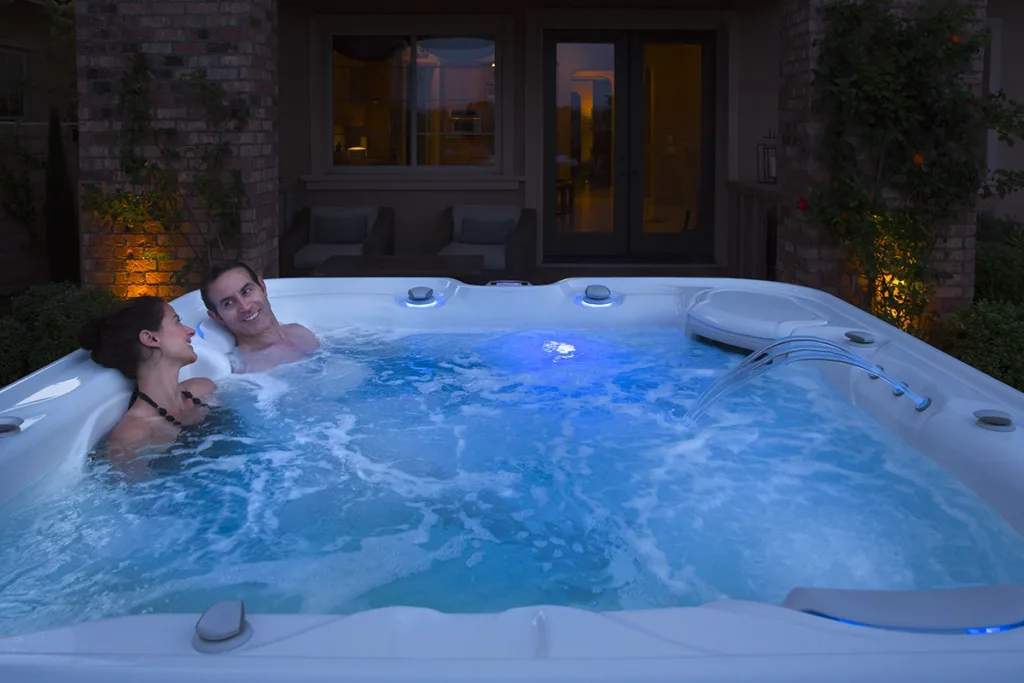
TL;DR: Do hot tubs help you sleep better?
Yes! Hot tubs can support better sleep quality over time by helping you relax, relieving sore muscles, improving circulation, and facilitating a cool-down effect that calms the mind before bedtime. In one study, older adults who used a hot tub before bed had 27% lower odds of reporting poor sleep quality.1 The key lies in temperature, session duration, consistency, and lifestyle habits.
In this guide, we explore the science behind how hot tubs help you sleep better and offer tips to maximize the benefits.
How Do Hot Tubs Support Better Sleep?
Sleep plays a major role in how we think, feel, and function each day. But according to research, about 1 in 3 people in the U.S. don’t get enough quality sleep each night.2 This can have detrimental effects on daily life that go far beyond fatigue alone.
According to Johns Hopkins Medicine, sleep deprivation is linked to a 48% higher risk of heart disease, a tripled risk of type 2 diabetes, and a 33% higher risk of dementia.3 Poor sleep also weakens your immune system, disrupts hunger hormones, and takes a toll on your mood and mental health.
But there’s good news. In research, hot tubs show promising results for improving sleep quality and overall wellness. Below, we explore some of the key ways that a consistent hot tub routine can help support better sleep.
Realigning Your Internal Clock
We all have an internal clock called a circadian rhythm that regulates how and when we fall asleep. It aligns with the sun’s day and night cycle, using cues like light and temperature to know when it’s time to rest.
One of the ways it prepares your body for sleep is by triggering a drop in your core body temperature. This natural cool-down signals to the brain that it’s time to sleep. Warm water immersion 1–2 hours before bed can help you fall asleep faster and enjoy higher quality rest.4 While soaking in a hot tub temporarily raises your core body temperature, stepping out triggers a rapid cool-down effect that reinforces your circadian rhythm’s natural sleep signal. This can result in a deeper, more peaceful sleep that leaves you feeling refreshed and well-rested.
Supporting Pain Relief
Physical discomfort is one of the top causes of poor sleep. According to the National Sleep Foundation, 2 in 3 people with chronic pain have trouble sleeping.5 Waking up throughout the night can disrupt your sleep cycle and make it difficult to feel well-rested, even if you get enough hours in.
Hot tubs combine warmth, buoyancy, and hydrotherapy massages for powerful pain relief. By stimulating blood flow, they help the body transport oxygen and nutrients to recovering muscles more effectively while flushing out waste products that cause painful inflammation. Together, these effects help melt away tension and discomfort so you can get a better night’s sleep.
Increasing Deep Sleep
When we sleep, our brains and bodies cycle through four main stages:
- Light sleep
- Intermediate sleep
- Deep sleep (slow-wave sleep)
- Rapid eye movement (REM)
Slow-wave sleep (deep sleep) is the deepest, most restorative part of the sleep cycle. This is when your body repairs muscle, builds bone density, and strengthens immune functions.
Research suggests that when you soak in a hot tub before bedtime, your body may spend more time in deep sleep specifically, an outcome known as the Warm Bath Effect.6 This supports overnight healing and helps you feel more refreshed and energized the next day.
Improving Blood Flow
Poor circulation can cause pain, leg cramps, and restlessness that make it difficult to get a good night’s sleep. Even if you’re not waking up fully, these problems can repeatedly pull you out of rest and leave you feeling sluggish when you wake up.
Hot tubs are an easy way to give your circulation an extra boost. Soaking in warm water dilates blood vessels and improves circulation throughout the entire body,7 reducing these disruptions so you can enjoy longer periods of comfortable, restful sleep.
Reducing Stress and Anxiety
A racing mind is one of the biggest obstacles to falling asleep. On the other hand, sleep deprivation can worsen anxiety symptoms that make sleep even more challenging,3 creating a paradox that’s hard to break on your own.
Hot tubs help reduce stress and anxiety by activating your parasympathetic nervous system. This is the part of your body that’s responsible for rest and recovery. When you soak in a hot tub, it lowers stress markers like cortisol and cortisol8 and shifts you out of a fight-or-flight state so you can relax before bed. This calming effect can make a noticeable difference in your sleep quality over time.
Tips for Using a Hot Tub for Better Quality Sleep

Regularly soaking in a hot tub can do a lot for your sleep quality, but timing, temperature, and lifestyle habits make all the difference in how well it works. Here are a few expert tips to help you get the most out of every soak.
Optimal Hot Tub Settings for Better Sleep
If your goal is to improve sleep quality, the timing and temperature of your hot tub soaks make all the difference. Aim for:
- Ideal Water Temperature: Below 107°F (41.7°C)
- Soak Duration: Less than 18 minutes.
- Timing: 60–20 minutes before bedtime.
Following these guidelines can lead to higher sleep efficiency, fewer disturbances, and higher sleep quality.1
Pair Your Nightly Soak with a Wind-Down Ritual
A hot tub offers many benefits all on its own, but it can help your sleep quality even more when it’s part of a broader wind-down routine.
Below are some tips for making hot tubs a part of your nightly wind-down ritual:
- Follow the 3-2-1 Rule: Stop eating 3 hours before bed, stop working 2 hours before bed, and stop using screens 1 hour before bed.
- Dim the Lights: Our internal clocks register bright lights as signs that we should still be awake. Dimming them can signal that it’s time to relax and prepare for sleep.
- Incorporate Aromatherapy: After your soak, running a diffuser with calming essential oils like chamomile or lavender can help extend your relaxed state as you settle in for sleep.
- Go Screen Free: Play calm music on a timer or read a book after your nightly hot tub soak to reinforce the relaxed state your body and mind are already in before bed.
- Hydrate: Soaking in hot water can make you lose fluids through sweat, so be sure to drink enough water before and after your soak. Dehydration can leave you feeling restless, groggy, and more likely to wake up craving a glass of water in the middle of the night.
A healthy sleep routine is all about consistency. No matter what your hot tub schedule looks like, try to keep it consistent and build a routine, whether that’s every night or a few times a week.
Over time, this helps your body learn to associate the soak with winding down, making it easier to fall into deep, restful sleep.
Upgrade Your Wellness Routine with the Hot Tub of Your Dreams
Regularly soaking in a hot tub can have a powerful effect on your quality of sleep and daily quality of life. If you’re ready to upgrade your wellness routine, the Creative Energy team is here to help.
Since 1976, Creative Energy has been a premier hot tub dealer in the San Francisco Bay Area. We are proud to provide quality products, expert service, and a legacy you can trust. Our expert team is here to help you find the best hot tub for your needs, lifestyle, and budget.
Contact us today or stop by any of our Bay Area showrooms to explore our selection of hot tubs in person.
Disclaimer: The information in this article is intended for informational purposes only and does not constitute professional medical advice. Always consult your physician or a licensed physical therapist before beginning any new wellness practice.