
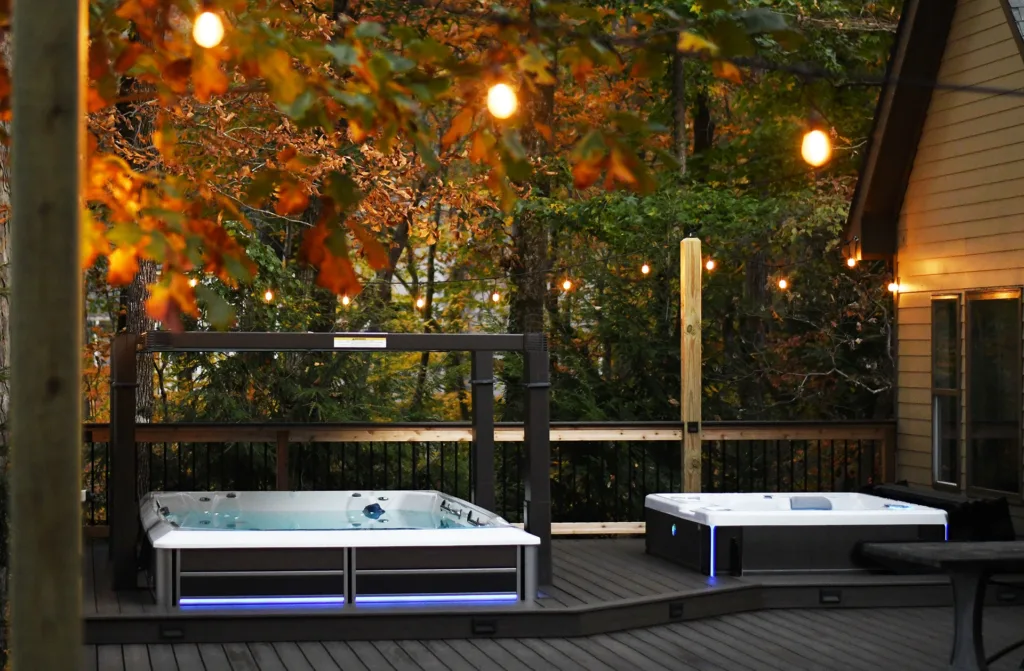
Get Your Hot Tub Ready For Fall
1. Inspection & Covers (Early Fall)
Start your cold-weather preparation before the rainy season and colder temperatures kick in.
Deep Clean the Shell & Cabinet: Drain the water if it’s due for a refill (every 3–4 months for traditional sanitizers). Scrub the shell with a non-abrasive hot tub cleaner. Clean the cabinet with 303 Multi Surface Cleaner. Look for cabinet cracks where cold air or pests seeking warmth could enter
Inspect and Clean Filters: Soak your filters in a deep cleaning chemical solution or replace them if they are show visible signs of wear or cracking to ensure maximum water flow and heating efficiency
Weatherpro Polyester Cover: Clean with a diluted dishsoap solution and follow up with a treatment with 303 Fabric Guard.
2. Saltwater Systems & Extended Water Life
If your hot tub is equipped with a saltwater system your fall/winter prep is even easier
Up to 1 Year Without Water Changes: Unlike traditional chlorine or brominetubs that require draining every 3 to 4 months, saltwater systems continuously generate pure chlorine from sodium chloride. This keeps water feeling softer, minimizes chemical buildup, and allows you to go up to 12 months before needing a full drain and refill.
Avoid Draining in Winter: Because you don’t need quarterly drains, you can avoid draining and refilling your tub during cold, rainy California winter days
Salt Cell Maintenance (Fall Checkup):
- Inspect your salt cartridge or generator cell in early autumn
- Clean off any calcium scale build-up using by rinsing in clear water
- Check system salt levels
3. Energy Efficiency & Temperature Settings
Electricity costs in California can spike during peak winter months. Keeping your tub warm efficiently is key.
Maintain a Constant Temperature: Keep your heater set to your desired temperature (typically 100°F to 104°F). Turning the heater off and on consumes more energy than keeping it at a stable temperature.
Thermal Layering: Inspect your cover’s foam core: If it feels heavy or waterlogged, its insulation value is compromised and the cover needs replacement.
4. Water Chemistry & Circulation
Colder air and increased autumn rainfall can impact your water chemistry.